It’s 3 p.m. Your eyes feel heavy, your brain feels foggy, and the thought of another coffee isn’t helping. Or maybe it’s the morning, and you’re already running on empty before the day has even begun.
When you’re tired, the usual advice is to push through. But there’s another way to reset: stop for a few minutes and meditate. It sounds like the opposite of what a tired person needs, yet many people find it clears the haze and brings back some energy and focus.
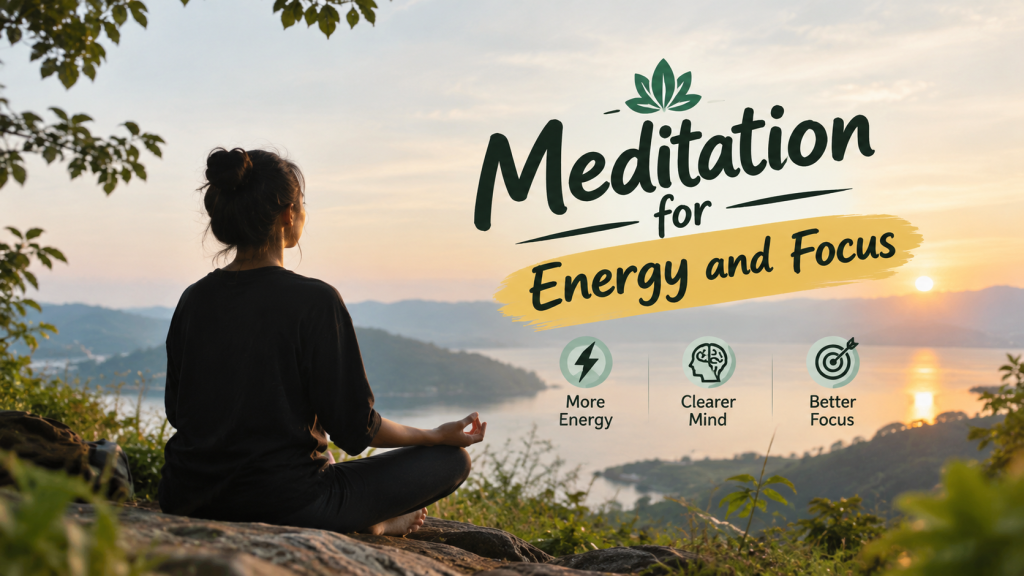
This guide covers meditation for energy and focus: why it can help, six quick practices, a morning routine, and a five-minute afternoon reset.
Can Meditation Really Boost Your Energy?
Meditation isn’t a stimulant, and it won’t replace a good night’s sleep. But a lot of tiredness isn’t really about the body running out of fuel. It’s mental fatigue: too many open tabs in your head, too much stress, and too little pause.
Slow, mindful practices can help by:
- Calming a racing mind, so you waste less energy on worry
- Helping you notice your real state, whether you’re tired, hungry, or just bored
- Waking up your body through breathing and gentle movement
- Creating a short break, which your brain often needs more than another task
Research on mindfulness and short breathing practices is still developing, and results vary from person to person. Many people report feeling more alert and focused afterward, but it’s not a guarantee.
When Tiredness Needs More Than Meditation
If you feel exhausted all the time, even after enough sleep, don’t just try to meditate it away. Persistent fatigue can come from sleep problems, low iron, thyroid issues, depression, and more. A doctor can help you find out what’s going on.
Meditation works best alongside the basics: sleep, food, water, movement, and sunlight.
6 Quick Meditation Practices for Energy and Focus
1. Energizing Breath
This is a fast way to feel more awake. Sit tall and breathe in through your nose, then out through your nose, in a steady, slightly quicker rhythm. Keep it light and smooth for about 20 to 30 breaths. Then breathe normally for a minute.
Caution: Skip faster breathing if you’re pregnant, have high blood pressure, a heart or lung condition, epilepsy, or tend to feel dizzy. Stop right away if you feel lightheaded.
2. The Morning Intention Sit
Before you reach for your phone, sit up in bed or on a chair for three minutes. Take slow breaths and ask yourself, “What’s the one thing that matters most today?”
Starting with a clear intention helps your energy go toward what you actually care about, instead of whatever pops up first.
3. Walking Meditation Outside
If you can step outdoors, do it. Walk slowly for five minutes, feeling each step and noticing the light, air, and sounds around you.
Natural light and gentle movement are both great for waking up the body. If you like greenery, you may enjoy our guide to plants meditation too.
4. Standing Body Awareness
When sitting makes you sleepier, stand up. Plant your feet hip-width apart and let your arms hang. Take three slow breaths, then raise your arms overhead as you inhale and lower them as you exhale.
Notice your feet on the floor, your posture, and your breath. It takes just two minutes, and it’s easy to do at your desk.
5. The Eyes-Open Reset
Closing your eyes can make you drowsy, so try this with them open. Soften your gaze on a spot a few feet in front of you. Breathe slowly and count ten exhales.
When your mind wanders, notice it and return to the count. It’s a simple way to refocus without losing alertness.
6. Sunrise Light Visualization
Imagine a warm golden light at the center of your chest, like the sun just rising. With each inhale, picture it growing a little brighter. With each exhale, picture it spreading softly through your body.
It’s a gentle, imaginative practice that many people find uplifting when they feel flat.
A 10-Minute Morning Routine
Try this to start your day with a clearer head:
- Minutes 1 to 2: Sit comfortably (a supportive seat helps, and our guide to the best meditation cushion for sitting comfort can point you in the right direction). Take slow, deep breaths.
- Minutes 3 to 5: Do the energizing breath, then return to normal breathing.
- Minutes 6 to 8: Practice the sunrise light visualization.
- Minutes 9 to 10: Set your intention for the day and stretch gently.
A 5-Minute Afternoon Reset
When the afternoon slump hits:
- Minute 1: Stand up, stretch, and take three deep breaths.
- Minutes 2 to 3: Do the eyes-open reset, counting ten slow exhales.
- Minute 4: Shake out your hands and shoulders. Roll your neck gently.
- Minute 5: Choose your next task and begin with just the first small step.
Pair it with a glass of water and some fresh air for an extra lift.
How Is This Different From Meditating for Clarity?
Both help your focus, but they feel different. Practices like breath counting and noting are about quieting and steadying the mind, and you can learn more about them in our guide to meditation for clarity and focus. The practices above are more about waking up your body and mind when you feel low on energy.
Many people use both: energizing practices when they’re sluggish, and calming ones when they’re scattered.
Habits That Support Your Energy
Meditation helps, but these habits matter too:
- Sleep: Aim for a regular schedule and enough hours.
- Light: Get some daylight in the morning.
- Movement: Short walks and stretch breaks keep you alert.
- Water and food: Dehydration and skipped meals can cause fatigue.
- Breaks: Rest for a few minutes after each focused work block.
- Caffeine: Use it mindfully, and avoid it late in the day.
Common Mistakes to Avoid
- Meditating lying down when tired. You’re likely to fall asleep. Sit or stand instead.
- Forcing fast breathing for too long. Gentle and steady is better.
- Expecting a coffee-like jolt. The effect is subtler and calmer.
- Skipping sleep and hoping meditation will fix it. It can’t replace rest.
- Doing it once and giving up. Practice for a few weeks and see how you feel.
FAQs About Meditation for Energy and Focus
Can meditation give you energy?
It can help you feel more awake and less mentally drained, but it isn’t a substitute for sleep or good nutrition.
What is the best meditation for tiredness?
Short, active practices such as an energizing breath, walking meditation, or standing body awareness tend to work better than long, still sessions when you’re tired.
How long should I meditate for an energy boost?
Three to ten minutes is plenty. Even a one-minute pause can help.
Is it better to meditate in the morning or the afternoon?
Both can work. Mornings help set your intention, and afternoons help beat the slump. Choose what fits your routine.
Will I fall asleep if I meditate when I’m tired?
It’s possible. Sit upright, keep your eyes open or softly focused, or stand up to stay alert.
Is fast breathing safe for everyone?
No. People with certain health conditions, those who are pregnant, or anyone who feels dizzy should avoid it. When in doubt, ask a doctor.
Final Thoughts
You don’t always need more coffee or more willpower. Sometimes you just need a few quiet minutes to breathe, move, and reset.
Try one practice from this list today, perhaps the five-minute afternoon reset, and notice how you feel afterward. Small pauses can add up to more energy and a sharper mind.