If you have ever sat down to meditate and felt your mind racing in ten directions, you are not alone. Many people find that holding a smooth, cool stone gives their hands something to do and their attention somewhere to land. That is the quiet appeal of meditation stones.
In this guide, you will learn what meditation stones are, which ones are worth trying, and exactly how to use them in your practice. Whether you are brand new to meditation or have practiced for years, a simple stone can make the habit easier to stick with.
What Are Meditation Stones?
Meditation stones are natural crystals, gemstones, or polished rocks used as a focus aid during meditation. People hold them, place them nearby, or set them on the body while they breathe and relax.
They have a long history. Prayer beads and sacred stones appear in Buddhist, Hindu, and many other traditions. Today, people use them in everything from mindfulness sessions to yoga and breathwork.
Do Meditation Stones Actually Work?
Honest answer: there is no scientific proof that crystals have special healing energy. Studies that tested crystals against look-alike fake stones found that people reported similar effects from both, which points to the placebo effect.
That does not make them useless. A stone gives you:
- A physical anchor. Feeling weight and texture pulls attention back to the present.
- A ritual cue. Picking up the same stone each day tells your brain it is time to settle.
- Intention. Choosing a stone for a purpose, such as calm or focus, keeps that goal in mind.
Think of meditation stones as a helpful tool, not a medical treatment. They should never replace professional care for anxiety, depression, or any health condition.
9 Best Meditation Stones
1. Amethyst: Best for Calm and Stress Relief
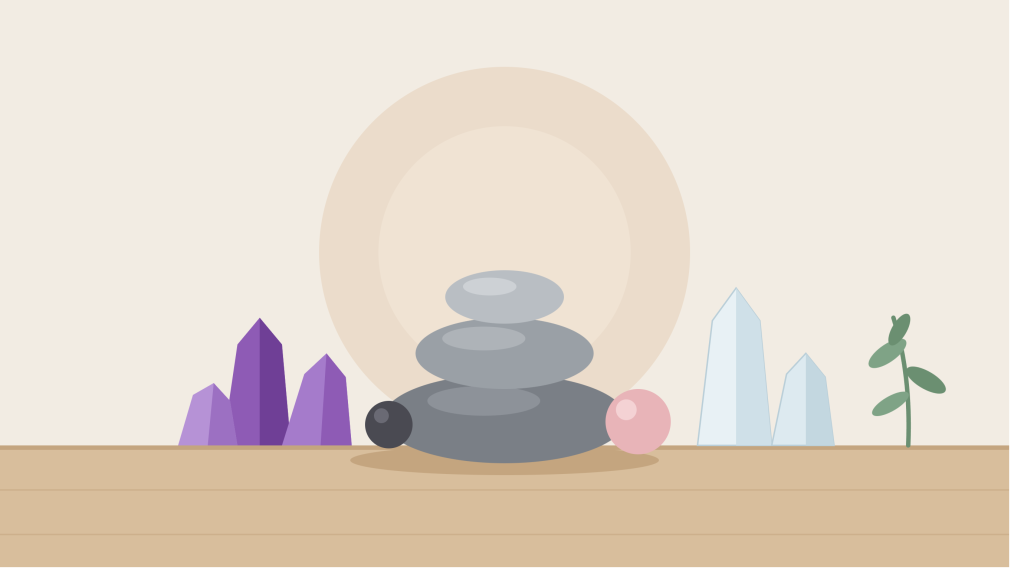
Amethyst is the classic meditation crystal, known for its soft purple color. People commonly use it to ease racing thoughts and wind down at night. It is also affordable and easy to find.
2. Clear Quartz: Best for Focus and Clarity
Often called the “master” crystal, clear quartz is a favorite when you want a clear mind. It pairs well with any intention, so it suits beginners who want just one stone.
3. Rose Quartz: Best for Self-Compassion
Rose quartz has a gentle pink tone and is linked with kindness and emotional comfort. It works well for loving-kindness (metta) meditation.
4. Black Tourmaline: Best for Grounding
Dark and heavy-feeling, black tourmaline is popular for grounding. If you feel scattered or anxious, holding it can help you feel steadier.
5. Lepidolite: Best for Anxiety and Overthinking
Lepidolite has a lilac, sparkly look and is often chosen by people who want to soften nervous energy before sleep or meditation.
6. Smoky Quartz: Best for Releasing Tension
Brown and translucent, smoky quartz is used for letting go of stress and heavy thoughts. It is a good companion for body-scan meditation.
7. Labradorite: Best for Intuition and Reflection
With its flashes of blue and green, labradorite is a favorite for reflective or journaling-style meditation.
8. Selenite: Best for Peaceful Space
Selenite is soft, pale, and often shaped into wands or slabs. Many people place it in the room to create a quiet atmosphere. Note that it is fragile and should not get wet.
9. Moonstone: Best for Emotional Balance
Moonstone has a gentle glow and is linked with calm and cycles. It suits evening practice and moments of change.
How to Use Meditation Stones (Step by Step)
- Pick one stone. Do not overthink it. Choose the one you are drawn to.
- Set an intention. Something simple, like “I want to feel calm.”
- Get comfortable. Sit or lie down in a quiet place.
- Hold or place the stone. Rest it in your palm, on your lap, or on your chest if lying down.
- Focus on your breath and the stone. Notice its weight, temperature, and texture.
- Return when your mind wanders. Gently bring attention back to the stone each time.
- Close with gratitude. After 5 to 15 minutes, take a deep breath and slowly open your eyes.
Beginner tip: Start with five minutes a day. Consistency matters far more than length.
How to Choose the Right Stone for You
- Match it to your goal. Calm: amethyst or lepidolite. Focus: clear quartz. Grounding: black tourmaline.
- Trust your reaction. If a stone feels good in your hand, that is a perfectly valid reason to choose it.
- Pick a size you can hold. A tumbled stone that fits your palm works well.
- Buy from a trusted seller. Look for clear labeling, and be careful of dyed or glass imitations sold as natural crystals.
How to Cleanse and Care for Your Stones
Many people “cleanse” stones to reset them before use. Common methods include:
- Resting them in moonlight overnight
- Wiping them gently with a soft cloth
- Placing them near selenite
- Using smoke from sage or incense
Always check the stone first. Selenite and some others dissolve or fade in water and sunlight.
FAQs About Meditation Stones
What is the best stone for beginners?
Amethyst or clear quartz. Both are affordable, easy to find, and versatile.
Where should I place meditation stones?
In your hand, on your lap, beside you, or on your body if lying down. Do what feels comfortable.
How many stones should I use?
One is plenty. As you get comfortable, you can try a small group of two to three.
Can I meditate without stones?
Absolutely. Stones are optional. They are only a tool to support your focus.
Final Thoughts
Meditation stones will not do the work for you, but they can make your practice feel more grounded and personal. Start with one stone, give it five minutes a day, and notice what changes.
If you are curious, pick up one stone this week and try it for five minutes. Notice how it feels, and let that guide your next step.