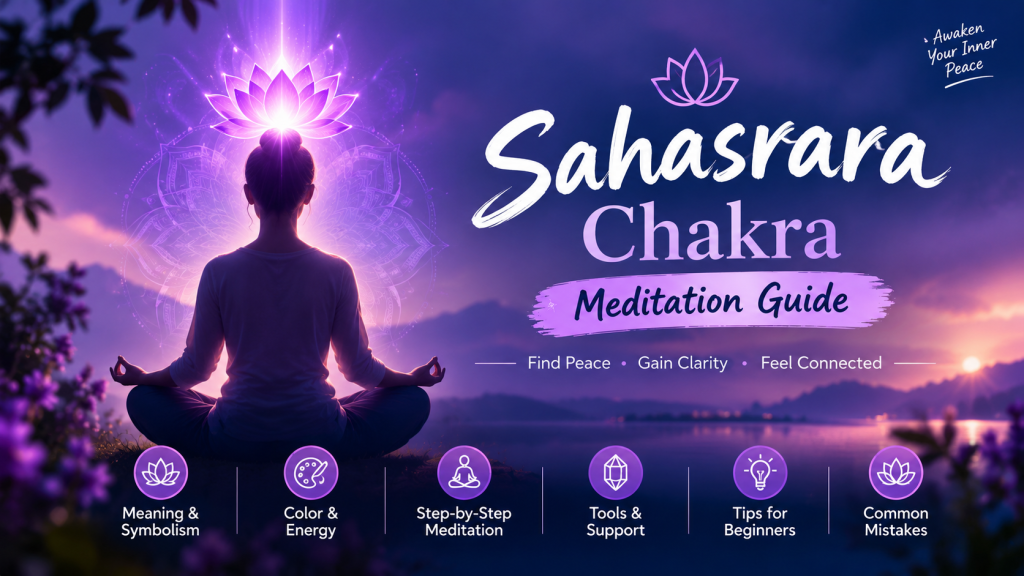
Imagine a soft violet light resting at the very top of your head, opening slowly like a lotus flower. For centuries, practitioners of yoga and tantra have used this image to focus the mind and reflect on connection, stillness, and awareness.
That image belongs to the Sahasrara chakra, often called the crown chakra. In this guide, you’ll learn what it means, its traditional symbols, and how to do a simple Sahasrara chakra meditation step by step, even if you’re completely new to chakras.
What Is the Sahasrara Chakra?
In the yogic tradition, chakras are described as energy centers along the body. There are seven main ones, and Sahasrara is the seventh and highest.
The word “Sahasrara” comes from Sanskrit and is commonly translated as “thousand-petaled.” It’s usually pictured as a lotus flower at the crown of the head, glowing in violet or white light. Many traditions link it with spiritual awareness, inner peace, and a sense of connection to something larger than yourself.
Sahasrara Chakra at a Glance
| Detail | Traditional description |
|---|---|
| Name | Sahasrara (Crown Chakra) |
| Position | Seventh chakra, top of the head |
| Meaning | “Thousand-petaled” |
| Symbol | A lotus with a thousand petals |
| Color | Violet or white |
| Seed sound | Often silence, or “Om” |
| Themes | Awareness, connection, spirituality, inner peace |
Different schools describe these details a little differently, so you may see small variations from one source to another.
A Note on Beliefs and Evidence
It’s worth being honest here. Chakras come from spiritual traditions that began in India. They’re a meaningful framework for many people, but there is no scientific evidence that chakras exist as physical energy centers in the body.
That doesn’t mean the practice has nothing to offer. Sitting quietly, breathing slowly, and focusing your mind can feel calming, whatever your beliefs. You can approach Sahasrara chakra meditation as a spiritual practice, a mindfulness exercise, or both.
It should never replace medical or mental health care, and it isn’t a way to diagnose or treat any condition.
What Does a “Balanced” Crown Chakra Mean?
In tradition, a balanced Sahasrara chakra is described as bringing feelings like:
- Calm and clarity
- A sense of purpose or connection
- Openness and curiosity
- Gratitude and presence
An imbalanced one is traditionally described as feeling disconnected, restless, or stuck in overthinking. Remember, these are symbolic descriptions, not medical signs. If you’re struggling with how you feel day to day, speaking with a doctor or therapist is a wise step.
How to Prepare for Crown Chakra Meditation
A little preparation makes the practice easier:
- Pick a quiet space. Somewhere you won’t be disturbed for 10 to 15 minutes.
- Sit comfortably. A cushion helps your spine stay upright. Our guide to the best meditation cushion for sitting comfort can help you choose one.
- Wear loose clothes. Nothing tight around your waist or neck.
- Set a gentle intention. Something simple, like “I want to feel calm and present.”
- Silence your phone.
Step-by-Step Sahasrara Chakra Meditation
Step 1: Settle Your Body
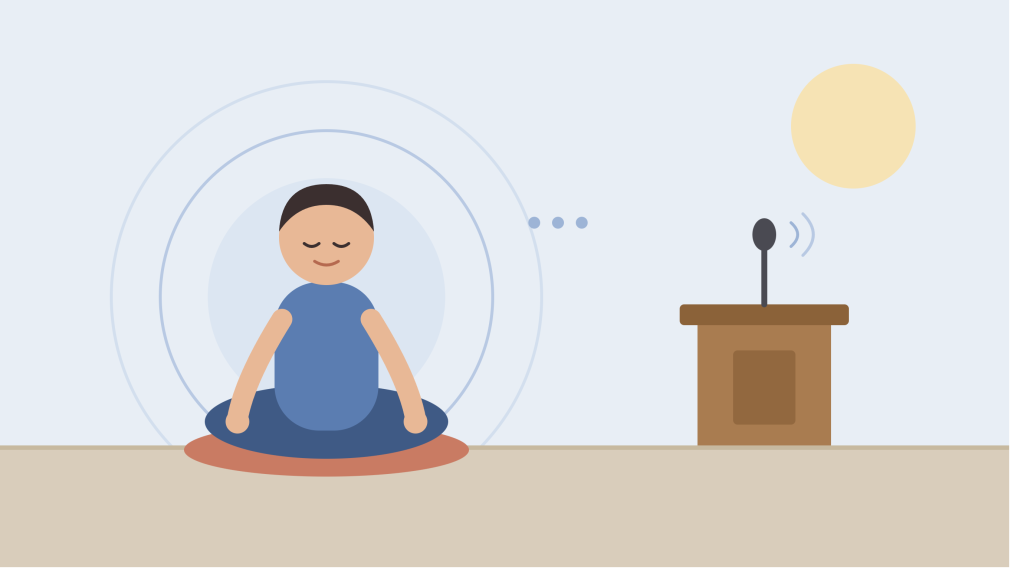
Sit with your back tall but relaxed. Rest your hands on your knees or in your lap. Close your eyes, or look softly at the floor.
Step 2: Take Slow Breaths
Breathe in through your nose for four counts and out slowly for six. Do this for about two minutes, letting your shoulders and jaw soften with each exhale.
Step 3: Bring Attention to the Crown of Your Head
Without straining, gently notice the very top of your head. You might feel warmth, tingling, or nothing at all. All of that is fine.
Step 4: Visualize the Violet Lotus
Picture a lotus flower of violet or white light resting just above the crown of your head. See its petals slowly opening, one by one, as you breathe.
Let it glow softly. There’s no need to force the image. If it fades or changes, simply bring it back.
Step 5: Use a Mantra (Optional)
Some people like to repeat the sound “Om” quietly or silently as they breathe out. Others prefer to practice in complete silence, since the crown chakra is often linked with stillness.
Choose whatever feels natural to you.
Step 6: Rest in Stillness
For the next few minutes, stay with the visualization and your breath. When thoughts come, label them lightly as “thinking,” and return to the image of the lotus.
Step 7: Come Back Slowly
When you’re ready, take a deeper breath, wiggle your fingers and toes, and gently open your eyes. Sit for a moment before standing.
Simple Variations to Try
- Violet light meditation: Imagine violet light filling your head, then flowing slowly through your whole body.
- Silent sitting: Skip the visualization and just rest in quiet awareness for five to ten minutes.
- Gratitude version: Place a hand on your heart, then bring your attention to the crown, and think of something you’re thankful for.
- Movement version: Raise your hands slowly above your head as you inhale, and lower them as you exhale.
Tools That Some People Use for Crown Chakra Practice
These are optional, but many people enjoy them as part of the ritual:
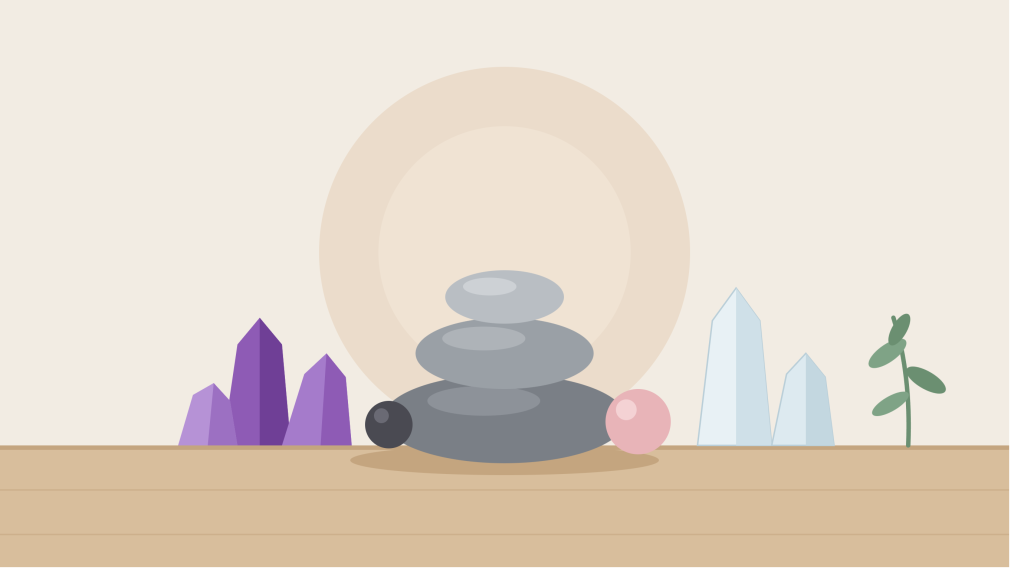
- Crystals: Amethyst, clear quartz, and selenite are traditionally linked with the crown chakra. If you’re curious, read our guide to meditation stones.
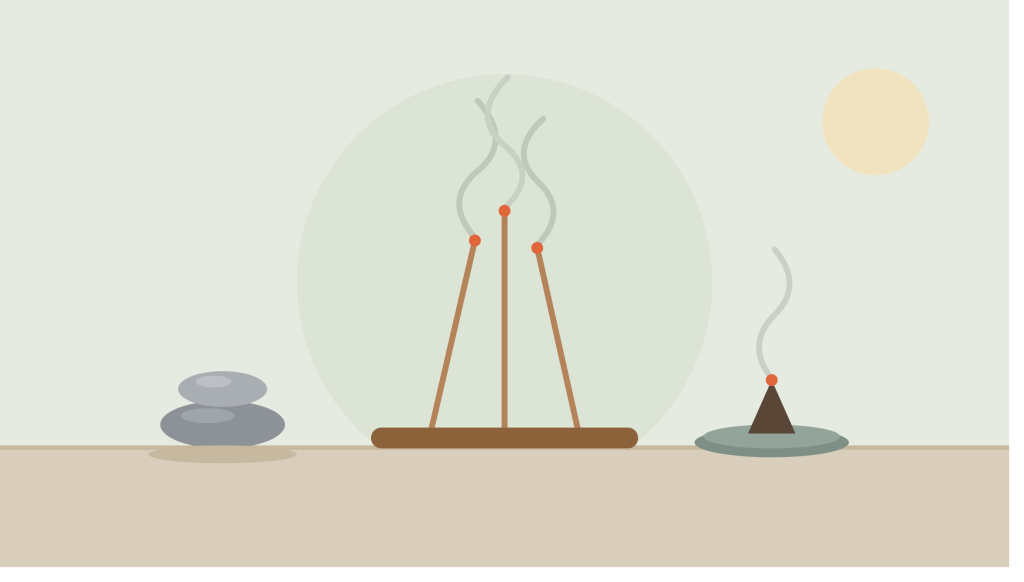
- Scents: Frankincense and sandalwood are popular in meditation. Here’s how to use incense for meditation safely.
- Colors: A violet or white cloth, candle, or light can add to the atmosphere.
They’re not necessary. Your breath and attention are all the practice really needs.
Tips for Beginners
- Start small. Five to ten minutes is plenty at first.
- Be consistent. Short, regular sessions beat long, rare ones.
- Don’t chase experiences. You don’t need to feel anything dramatic. Calm and quiet are enough.
- Keep your expectations gentle. Visualization is a skill, and it grows with practice.
- Pair it with grounding. If you feel floaty, finish by feeling your feet on the floor and taking a few slow breaths.
If you’d like to build steadier attention first, try our guide to meditation for clarity and focus.
Common Mistakes to Avoid
- Forcing the visualization. Trying too hard usually creates tension.
- Judging your experience. There’s no right or wrong way to feel.
- Skipping the basics. Posture and breath matter more than any symbol.
- Treating it as a cure. It’s a calming practice, not a replacement for care.
- Practicing when overwhelmed. If strong emotions or dizziness come up, stop, open your eyes, and ground yourself.
When to Take a Step Back
If meditation leaves you feeling anxious, disconnected, or unwell, stop and take a break. Consider talking to a doctor, therapist, or an experienced teacher. Some people find that intense, introspective practices are better done with guidance.
FAQs About Sahasrara Chakra Meditation
What is Sahasrara chakra meditation?
It’s a meditation practice that focuses on the crown chakra, usually through breathing, visualizing a violet or white lotus, and sometimes using a mantra like “Om.”
Where is the Sahasrara chakra located?
Traditionally at the top of the head, sometimes described as just above the crown.
What color is the crown chakra?
Violet or white, depending on the tradition.
What is the mantra for the Sahasrara chakra?
Many traditions use “Om,” or practice in silence. Either option is acceptable.
How long should I meditate on the crown chakra?
Ten to fifteen minutes is a comfortable length for beginners.
Is chakra meditation scientifically proven?
Chakras come from spiritual tradition, not science. However, the calming parts of meditation, such as slow breathing and focused attention, are widely studied and may help many people relax.
Can I do crown chakra meditation without crystals or incense?
Absolutely. They’re optional extras. You only need a quiet place and a few minutes.
Final Thoughts
Sahasrara chakra meditation is a gentle way to turn inward, quiet the mind, and reflect on connection and awareness. You can follow it as part of a spiritual path or simply as a calming visualization practice.
Start with ten minutes this week. Sit tall, breathe slowly, picture the violet lotus opening above your head, and let the stillness do the rest.